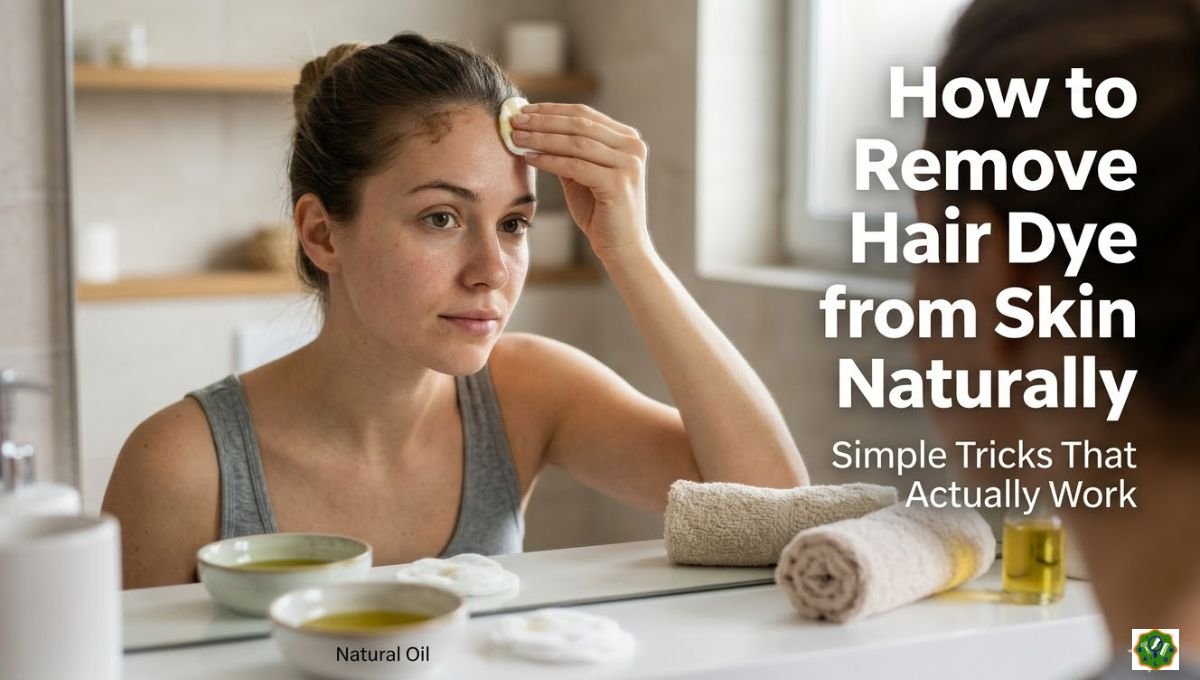
Dyeing your hair at home is exciting — until you look in the mirror and notice dark stains on your forehead, ears, or hands. It happens to almost everyone. The dye slips past where it should be and leaves behind a stubborn mark that does not budge with just water. If you are dealing with this right now, you are in the right place.
In this guide, you will learn exactly how to remove hair dye from skin naturally using simple ingredients you already have at home. No harsh chemicals, no expensive products — just easy, proven methods that are gentle on your skin and actually get the job done.
How to Remove Hair Dye from Skin Naturally — Act Fast First
Before trying any method, the most important tip is this: the sooner you treat the stain, the easier it is to remove. Fresh dye that has just touched your skin is much easier to lift than stain that has been sitting for hours. As soon as you notice dye on your skin, gently blot the area with a damp cloth to remove as much as possible before it sets in.
Avoid rubbing it aggressively — this can spread the stain and irritate the skin. Use lukewarm water only, not hot water, because heat opens your pores and allows the dye to sink deeper into the skin.
Now let us go through the best natural methods one by one.
7 Natural Ways to Remove Hair Dye from Skin
1. Olive Oil or Coconut Oil
Natural oils are one of the gentlest and most effective ways to remove hair dye from skin. They work by breaking down the dye pigment without stripping or drying your skin. This makes them perfect for sensitive areas like the face and hairline.
How to use it:
- Dab a cotton ball or your fingertip into olive oil or coconut oil
- Apply it directly onto the stained area
- Massage gently in circular motions for a minute or two
- Let the oil sit on the skin for 10 to 15 minutes — or even overnight for stubborn stains
- Wipe off with a warm damp cloth and rinse with water
Baby oil works just as well if you do not have olive or coconut oil at home. The downside of oils is that they may take longer than harsher methods, but they are safe, affordable, and kind to your skin.
2. Baking Soda Paste
Baking soda is a mild natural abrasive that can gently lift dye from the surface of your skin. It is great for hands, arms, and other areas that are not super sensitive.
How to use it:
- Mix one tablespoon of baking soda with just enough warm water to form a thick paste
- Apply the paste to the stained area
- Gently rub in circular motions with your fingertips for one to two minutes
- Rinse off with warm water and follow with a moisturizer
Avoid using baking soda on very sensitive or already irritated skin. If it feels uncomfortable, rinse it off immediately.
3. Baking Soda and Dish Soap Combo
For slightly older or more stubborn stains, combining baking soda with dish soap gives you a deeper clean. The dish soap adds degreasing power while the baking soda lifts the pigment.
How to use it:
- Mix one tablespoon of baking soda with one tablespoon of dish soap to create a paste
- Apply to the stained area and let it sit for five to ten minutes
- Scrub gently and rinse thoroughly with warm water
This method works especially well on the hands and arms. Be sure to moisturize after since dish soap can be slightly drying.
4. Toothpaste
Non-gel toothpaste is a surprisingly handy tool for removing hair dye stains. Many toothpastes contain mild abrasives and ingredients like baking soda that help lift stains without much effort.
How to use it:
- Apply a small amount of non-gel toothpaste to the stained skin using a cotton swab or your fingertip
- Gently rub in circles for about a minute
- Leave it on for five minutes
- Remove with a warm damp cloth and rinse well
This method is gentle enough for most skin types. Avoid whitening toothpastes on sensitive or broken skin as they may cause mild irritation.
5. Lemon Juice
Lemon juice is a natural bleaching agent that can help fade and lift hair dye stains from the skin. Its acidic nature breaks down the pigment effectively. However, because it is acidic, you should use it sparingly and only for short periods.
How to use it:
- Squeeze fresh lemon juice onto a cotton ball
- Apply it to the stained area and let it sit for two to three minutes
- Gently rub the area and rinse off with clean water
- Apply a moisturizer right after to prevent dryness
Avoid using lemon juice near the eyes, on broken skin, or if you have very sensitive skin. Always moisturize afterward since lemon juice can dry out the skin with repeated use.
6. Petroleum Jelly (Vaseline)
Petroleum jelly is most well known as a way to prevent hair dye stains before they happen, but it can also help remove or loosen stains after the fact. It creates an oily barrier that gradually breaks down dye pigments on the skin.
How to use it:
- Apply a generous amount of petroleum jelly directly onto the stained area
- Massage it gently into the skin
- Leave it on for as long as possible — ideally overnight
- Wipe off with a clean cloth and rinse with soap and water
This method is extremely gentle and works well for delicate areas like around the forehead, ears, and neck. It is also a great overnight treatment for stains that did not fully come off with other methods.
7. Aloe Vera Gel
Aloe vera is not only soothing but also has natural properties that can help lighten and lift stains from the skin over time. It is the best option for people with very sensitive or irritated skin.
How to use it:
- Apply pure aloe vera gel directly onto the stained area
- Massage gently and leave it on for ten to fifteen minutes
- Rinse with warm water
Aloe vera may not be the strongest stain remover on this list, but it is extremely safe and can be used multiple times a day without irritating the skin. It also helps soothe any redness or irritation caused by the dye.
Tips for Removing Dye from Specific Areas
Hairline and Forehead
These areas are the most visible and often the most affected. Use the oil method or petroleum jelly here as they are gentle enough for facial skin. Avoid baking soda on the face if your skin is sensitive.
Ears and Neck
The skin around the ears and neck can be thin and sensitive. Stick to oils, aloe vera, or petroleum jelly for these areas. Avoid scrubbing too hard.
Hands
Your hands can handle slightly stronger methods. Baking soda paste, the baking soda and dish soap combo, or toothpaste all work well here. You can also try gently exfoliating with a sugar scrub in the shower.
What to Avoid When Removing Hair Dye from Skin
Knowing what not to do is just as important as knowing the right methods.
- Do not use nail polish remover on your skin — it is far too harsh and can cause chemical burns
- Do not scrub aggressively — this can damage your skin and spread the stain
- Do not use hot water — it opens pores and drives the dye deeper
- Do not use bleach or strong chemical cleaners on your skin under any circumstances
- Do not ignore irritation or redness — rinse the area immediately if any method causes discomfort
How to Prevent Hair Dye Stains in the Future
A little preparation goes a long way. Here are the best ways to keep your skin stain-free the next time you dye your hair:
- Apply petroleum jelly or a thick moisturizer along your hairline, ears, and neck before you start
- Always wear gloves when applying dye
- Keep a damp cloth nearby to wipe off any drips immediately
- Work in sections and be careful when applying dye near the edges of your hairline
- Rinse off any dye that touches the skin right away — do not let it sit
How Long Do Hair Dye Stains Last on Skin?
If you do not treat the stain at all, most hair dye marks will fade naturally within three to five days. This is because the skin naturally sheds its outer cells over time. Darker dyes like black or deep brown may take a little longer to fade completely.
With natural removal methods, you can significantly speed up this process and often remove the stain within the same day or overnight, depending on how long the dye was left on the skin.
Final Thoughts
Getting hair dye on your skin is one of those little annoyances that comes with a DIY dye job, but it is absolutely nothing to stress over. With simple natural ingredients like olive oil, baking soda, lemon juice, or even toothpaste, you can gently and effectively lift the stain without harming your skin.
Always act quickly when you notice a stain, be gentle with your skin, and moisturize after any treatment. And next time, a little petroleum jelly along your hairline before you start will save you a lot of trouble.
Your skin will be back to normal before you know it.