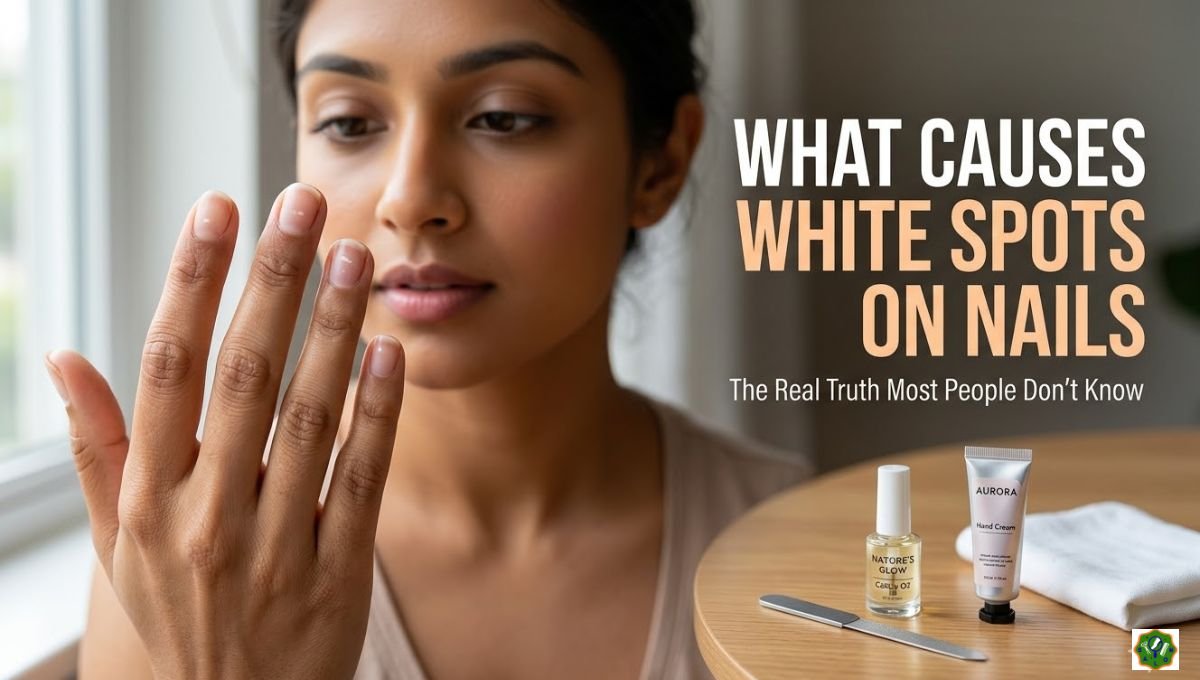
Have you ever looked at your nails and noticed small white dots or streaks appearing out of nowhere? You are not alone. White spots on nails are one of the most common nail concerns people face every day. Most people assume it means a calcium deficiency or some serious health problem, but the reality is often much simpler — and sometimes, it does need attention.
In this article, you will learn exactly what causes white spots on nails, what each type means, when to worry, and how to get rid of them for good. Whether it is just one small dot or several nails turning white, this guide covers everything in simple, easy language.
What Causes White Spots on Nails — Understanding Leukonychia
The medical term for white spots or discoloration on the nails is leukonychia. It simply means white nails. This condition is very common and affects people of all ages, including children. The white spots can appear as tiny dots, larger patches, horizontal lines, or even cover the entire nail in serious cases.
There are three main types of leukonychia based on where the white color comes from:
- True leukonychia — the nail plate itself is affected, usually from injury
- Apparent leukonychia — the nail bed beneath the nail shows white due to blood vessel changes
- Pseudo-leukonychia — the surface of the nail is damaged by external causes like nail polish or fungus
Understanding the type helps figure out the cause. Let us now look at each cause in detail.
The 7 Most Common Causes of White Spots on Nails
1. Nail Injury — The Number One Reason
The most common reason people develop white marks on their nails is simple physical injury. Any trauma to the nail matrix — the area at the base of the nail where the nail grows from — can leave a white mark as the nail grows out.
This injury does not always have to be dramatic. Common daily examples include:
- Accidentally hitting your finger against a hard surface
- Biting your nails repeatedly
- Pressing too hard while typing or tapping
- Slamming a finger in a door
Because nails grow slowly, you may see the white spot appear weeks after the injury. This often confuses people who cannot remember hurting their nail. Do not worry — these spots are harmless and will grow out on their own.
2. Rough or Aggressive Manicures
Getting a manicure feels relaxing, but too much pressure on your nail bed or cuticles can damage the nail matrix. When a manicurist cuts or pushes the cuticles back too aggressively, it can cause white spots that show up later.
Additionally, leaving nail polish on for several weeks at a time does not allow the nail to shed cells normally. This creates dry, white patches on the nail surface — a condition called keratin granulation.
3. Nail Polish Allergies and Chemical Reactions
Some people develop white spots due to an allergic reaction to certain nail products. This includes:
- Nail polish
- Nail hardeners
- Nail polish remover
- Acrylic or gel nail chemicals
- Nail glue
These chemicals can strip the outer layers of the nail and cause surface discoloration. If you notice white marks appear every time you use a particular product, an allergy or chemical sensitivity may be the cause. Switching products or taking a break from artificial nails often helps.
4. Fungal Nail Infection
A fungal infection is another very common cause of white spots, especially on toenails. The most frequent type is called white superficial onychomycosis, which begins as small white or chalky dots on the nail surface.
Over time, if left untreated, the infection can spread and cause the nail to:
- Thicken and become brittle
- Crumble at the edges
- Develop a yellowish or brownish color
- Become painful
Fungal infections are more likely if you often walk barefoot in public places like locker rooms or pools, keep your feet in sweaty shoes for long periods, or live in a hot, humid climate. A dermatologist can confirm a fungal infection and prescribe the right antifungal treatment.
5. Mineral and Vitamin Deficiencies
You may have heard that white spots mean a calcium or zinc deficiency. This is partially true. While nail injury is a more common cause, nutritional deficiencies can sometimes contribute.
The most commonly linked deficiencies are:
- Zinc deficiency — can lead to brittle nails that break and develop white marks
- Calcium deficiency — may weaken the nail structure over time
To support your nail health, eating zinc-rich foods like nuts, seeds, and whole grains can help. For calcium, dairy products, leafy greens, and fortified foods are great choices. If you suspect a deficiency, a simple blood test from your doctor can confirm it.
6. Skin Conditions Like Psoriasis and Eczema
Certain inflammatory skin conditions can affect the nail matrix and cause nail changes including white spots. Research has found that psoriasis is one of the leading skin-related causes of leukonychia. Eczema and other skin conditions affecting the hands can also lead to nail discoloration over time.
If you already have a skin condition and notice nail changes, speak with your dermatologist about it. Managing the underlying condition often improves nail appearance too.
7. Underlying Health Conditions
In some rarer cases, white spots or white nails can be a sign of a more serious health problem. These usually show up as white lines across the full nail or half-and-half nails (partly white, partly brownish) rather than small isolated dots.
Conditions linked to nail whitening include:
- Kidney disease — can cause half-and-half nails
- Liver disease or cirrhosis — associated with Terry’s nails (mostly white nails)
- Low iron levels or anemia
- Thyroid disorders
- Diabetes
- Heavy metal poisoning from arsenic or lead (very rare, causes white lines)
These are unlikely if you only have a few small white dots. However, if your entire nail is white, or multiple nails have white bands that do not grow out, it is important to see a doctor.
When Should You See a Doctor?
Most white spots are harmless and go away as your nail grows out. However, visit a doctor or dermatologist if:
- The white spots do not fade over several months
- White lines run fully across multiple nails
- Your entire nail turns white
- The nails thicken, crumble, or develop a bad smell
- You have other health symptoms alongside the nail changes
Your doctor may do a blood test, take nail clippings for lab testing, or in some cases perform a small nail biopsy to find the cause.
How to Treat and Prevent White Spots on Nails
Treatment depends on the cause. Here is a simple breakdown:
For injury-related spots: No treatment needed. Wait for the nail to grow out. This can take 6 months or more for fingernails, and longer for toenails.
For fungal infections: Your doctor will recommend antifungal medication — either a topical cream applied to the nail, or oral pills for deeper infections.
For allergic reactions: Stop using the product causing the reaction and switch to gentler nail care products.
For nutritional deficiencies: Adjust your diet or take supplements as advised by your doctor.
For health conditions: Work with your doctor to manage the underlying condition. Nail changes often improve once the health issue is treated.
Simple Tips to Keep Your Nails Healthy
- Keep nails trimmed short and filed smooth
- Moisturize your cuticles and nails daily
- Wear gloves when doing wet work or using cleaning chemicals
- Avoid biting your nails
- Take breaks between manicures and gel nails
- Wear well-fitting shoes to avoid toenail pressure
- Do not walk barefoot in public wet areas
Final Thoughts
White spots on nails are usually nothing to panic about. In most cases, they are simply the result of a small injury to the nail that you may not even remember. However, it is good to pay attention to your nails because they can sometimes give useful clues about your overall health.
If the spots appear in unusual patterns, keep spreading, or come with other symptoms, a quick visit to the doctor can bring peace of mind and early treatment if needed. The best thing you can do right now is take good care of your nails, eat a balanced diet, and keep an eye on any changes.
Your nails deserve the same care and attention as the rest of your body — start today.