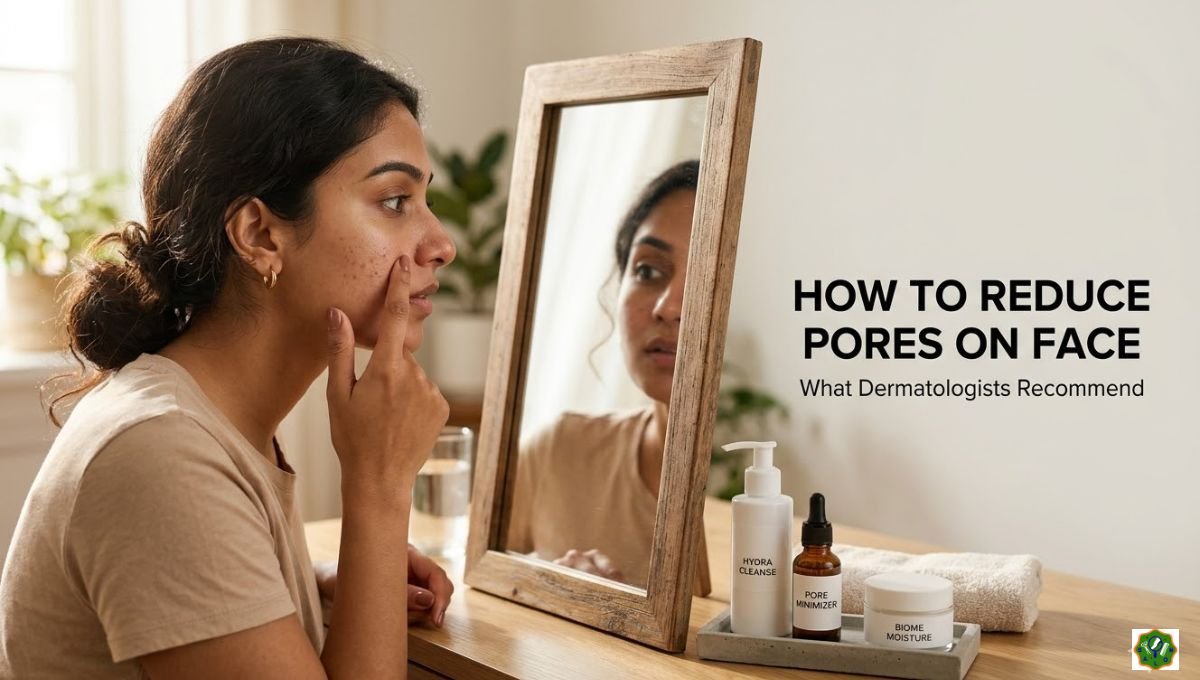
You look in the mirror — maybe a little too close, maybe under harsh lighting — and all you can see are your pores. Large, open, visible dots across your nose, forehead, and cheeks that no filter seems to erase in real life. You have tried pore-minimising primers, pore strips, toners that promise results, and still nothing seems to stick. The frustration is real, and so is the confusion — because there is so much conflicting advice out there about what actually works.
Here is what every dermatologist agrees on, and what most skincare brands will never tell you: you cannot close your pores permanently. Pores are not doors. They do not open and close. They are permanent structures in your skin that serve a vital biological purpose — releasing oil and sweat to keep your skin healthy. But — and this is the important part — you absolutely can make them look dramatically smaller, keep them consistently clear, and prevent them from stretching further over time. This guide covers exactly how to do that, using the most up-to-date advice from board-certified dermatologists, without wasting your time or money on things that do not work.
How to Reduce Pores on Face Permanently: What Science Actually Says
Before any remedy or routine, the most honest and useful thing to understand is what makes pores look large in the first place. According to board-certified dermatologist Dr. Mona Foad, enlarged pores usually mean your skin is producing more oil. When excess oil, dead skin cells, and debris collect inside a pore, that repeated congestion and buildup can stretch the pore opening over time, making it appear larger.
Four key factors drive visible pore size:
Genetics: Your baseline pore size is largely inherited. If your parents had large pores, there is a higher chance you will too. This is not something any cream or home remedy can override — but it does not mean nothing can help.
Excess oil production: Oily and combination skin types tend to have more visible pores because oil production fills and stretches the pore opening. Hormones — especially androgens — directly increase oil production, which is why pores often become more noticeable during puberty, menstruation, and hormonal fluctuations.
Age and collagen loss: As we get older, the skin loses collagen and elastin — the structural proteins that keep it firm and springy. When the skin around a pore loses its support structure, the pore walls sag and the opening looks wider. This is why pores tend to become more visible with age even in people who never had significant skin concerns before.
Sun damage: Ultraviolet rays from the sun break down collagen and damage the skin’s elasticity over time. The more sun damage your skin accumulates, the less firm it becomes — and the larger pores appear as a result.
Understanding these four drivers is what allows you to choose treatments and habits that actually address the root cause rather than just masking the appearance temporarily.
Daily Skincare Routine to Minimise Pores
Step 1: Cleanse Twice a Day — With the Right Cleanser
Washing your face every morning and evening is the most fundamental step in any pore-minimising routine. Cleansing removes the oil, dirt, makeup, and environmental debris that collect inside pores throughout the day and night. When pores stay clear, they look smaller. When they stay clogged, oil stretches them wider and they become increasingly visible over time.
The type of cleanser you use matters enormously. For oily and combination skin — the types most prone to large pores — a gel-based or foam-based cleanser works best. These formulas cleanse deeply without leaving a film or residue behind that could clog pores. Avoid oil-based and alcohol-based cleansers. Oil-based cleansers can leave residue that clogs pores and increases oiliness. Alcohol-based products irritate and inflame the skin, which causes pores to look larger, not smaller.
Equally important is how you cleanse. Use lukewarm water — never hot. Hot water irritates the skin, triggers inflammation, and makes pores look noticeably larger in the short term. Scrubbing aggressively has the same effect — always use gentle, circular motions with your fingertips and rinse thoroughly.
Step 2: Exfoliate With the Right Acids — Not Physical Scrubs
Exfoliation is essential for pore minimisation — but the type of exfoliation matters enormously. Physical scrubs with rough particles are too harsh for most skin types. They cause micro-tears in the skin surface, trigger inflammation, and ultimately make pores more visible, not less. What actually works are chemical exfoliants — specifically alpha hydroxy acids and beta hydroxy acids.
Salicylic Acid (BHA): This is the gold standard ingredient for pore-clearing. According to Dr. Mona Foad, salicylic acid is great because it works inside the pore to dissolve oil and debris. Unlike AHAs that work on the skin surface, salicylic acid is oil-soluble, which means it can actually penetrate into the pore lining and clean it from the inside out. It is ideal for oily, combination, and acne-prone skin types.
Glycolic Acid and Lactic Acid (AHAs): These work on the skin’s surface to smooth texture, reduce the appearance of dead skin buildup, and reveal fresher, more even-toned skin underneath. Glycolic acid suits normal to oily skin, while lactic acid is a gentler option better suited for sensitive or dry skin types. Both make the skin surface smoother and make pores look less prominent.
Use an exfoliating product — whether a toner, serum, or cleanser containing these acids — two to three times per week to start. If your skin tolerates it well, you can build to daily use for some formulations. Over-exfoliating strips the skin barrier and causes irritation, which worsens pore appearance, so always increase frequency gradually.
Step 3: Use a Niacinamide Serum
Niacinamide — also known as Vitamin B3 — is one of the most consistently recommended ingredients by dermatologists specifically for pore minimisation. It works by regulating oil production, reducing inflammation, and strengthening the skin barrier simultaneously. When oil production is controlled and the skin barrier is healthy, pores are less likely to fill up and stretch.
Niacinamide helps balance oil production and calm the skin, which can make pores look less prominent, according to Dr. Mona Foad. It is also very well-tolerated across all skin types — including sensitive skin — which makes it one of the most universally useful additions to any pore-focused routine.
Look for serums containing five to ten percent niacinamide. Apply it to clean skin before moisturiser each morning and evening. Results build gradually over six to eight weeks of consistent daily use.
Step 4: Apply a Non-Comedogenic Moisturiser
Skipping moisturiser because your skin is oily is one of the most common and most damaging skincare mistakes. When the skin is dehydrated, it compensates by producing even more oil — which means more congestion, more clogging, and larger-looking pores. The key is using a moisturiser that hydrates without clogging.
The word non-comedogenic means the product is formulated to not clog pores. Look for this term on every product you apply to your face — cleanser, moisturiser, sunscreen, and makeup. Using oil-free, water-based, or gel moisturisers gives your skin the hydration it needs without adding oil to an already oily environment. Ingredients like hyaluronic acid are ideal — they draw moisture into the skin without adding any oil or heavy texture.
Avoid thick, heavy moisturisers with ingredients like cocoa butter, shea butter, or coconut oil on the face if you have oily or pore-prone skin. As Dr. Nava Greenfield explains, thick and heavy ingredients may fill a pore and not allow the release of pore contents, causing an exaggerated appearance to pore size.
Step 5: Wear Sunscreen Every Single Day
This step is not optional — it is arguably the most important long-term action you can take to prevent pores from worsening over time. Ultraviolet damage breaks down collagen and elastin in the skin. As that structural support erodes, the skin around each pore loses its firmness and the pore opening looks wider. Daily sunscreen is key, since chronic UV damage can make pores look larger, according to Dr. Mona Foad.
Use a broad-spectrum sunscreen with SPF 30 or higher every morning — even on cloudy days and during winter. Choose a formula specifically labelled non-comedogenic and oil-free so it does not contribute to clogging. Mineral sunscreens containing zinc oxide are a particularly good option for oily and pore-prone skin because they sit on top of the skin rather than being absorbed, and zinc also has mild oil-controlling properties.
Best Ingredients That Actually Reduce Pore Appearance
Retinol and Retinoids
Retinol is one of the most evidence-backed skincare ingredients available — it addresses pores, wrinkles, acne, and skin texture simultaneously. Retinol increases cell turnover, which means dead skin cells are shed faster and replaced with fresh ones, reducing the buildup that clogs and stretches pores. It also stimulates collagen production, which firms the skin around the pore and makes the opening appear tighter.
According to a 2023 study, applying a high concentration of retinol can improve the appearance of pores noticeably. Start with an over-the-counter retinol serum or moisturiser used twice a week at night, building up to nightly use over four to six weeks as your skin adjusts. If over-the-counter products are not producing enough improvement, a dermatologist can prescribe tretinoin — a prescription-strength retinoid that works significantly faster and more powerfully.
Always apply retinol at night, as it increases the skin’s sun sensitivity. Never skip sunscreen the following morning.
Vitamin C
A 2022 study confirmed that a topical formulation containing Vitamin C is effective in improving the appearance of pores and other visible signs of ageing. Vitamin C is a potent antioxidant that neutralises UV-induced free radicals, stimulates collagen production, and improves skin brightness and texture. Use a Vitamin C serum in the morning before your sunscreen for maximum protective benefit.
Clay Masks
Clay masks — particularly those containing kaolin or bentonite clay — are one of the most effective at-home treatments for visibly reducing pore appearance in the short term. Clay works by absorbing excess oil from the skin surface and from inside the pore opening, making pores look cleaner, clearer, and smaller immediately after use. For oily or combination skin, using a clay mask twice a week is a consistent dermatologist-approved recommendation for ongoing pore management.
Witch Hazel Toner (Alcohol-Free)
An alcohol-free toner containing witch hazel is a useful step between cleansing and serum application. Witch hazel is a natural astringent that removes any remaining oil or residue after cleansing and helps tighten the appearance of the skin surface temporarily. The important distinction is alcohol-free — toners with high alcohol content strip the skin barrier and worsen pore problems over time despite the immediate tightening sensation they create.
Home Remedies That Help — and Those to Avoid
Several home remedies have genuine benefit for pore appearance when used correctly.
Aloe vera gel applied to clean skin hydrates and firms the skin surface, temporarily reducing the appearance of pores while supporting overall skin health. It is gentle enough for daily use and particularly useful for people with sensitive skin who cannot tolerate acid-based products.
Green tea contains antioxidants called catechins that reduce oil production and inflammation. Brewed and cooled green tea applied as a toner can reduce oiliness and make pores look smaller with consistent use.
Egg white masks temporarily tighten the skin and reduce pore visibility for a few hours. While the effect is not long-lasting, they are safe and can be useful before events when you want the skin to look as smooth as possible.
Ice cubes rubbed gently over the skin temporarily tighten the skin and reduce pore visibility — but the effect lasts only a few minutes until the skin warms back up. They are a useful quick fix but not a long-term solution.
However, several popular home remedies should be avoided entirely. Lemon juice directly on the face is too acidic, disrupts the skin’s pH, and causes irritation and sun sensitivity that worsens skin quality over time. Toothpaste on pores causes inflammation and should never be used as a skincare treatment. Baking soda is far too alkaline for facial skin and strips the skin barrier. These ingredients may seem natural and harmless but consistently cause more harm than good when used on the face.
Professional Treatments for More Significant Pore Reduction
For people whose pores do not respond sufficiently to home care, or who want faster and more significant improvement, professional dermatological treatments produce the most dramatic and longest-lasting results.
Chemical Peels
Professional chemical peels use higher concentrations of AHAs and BHAs than any over-the-counter product. They exfoliate the skin deeply, remove dead skin buildup, stimulate collagen production, and improve overall skin texture. Superficial peels require no downtime and can be done monthly as a maintenance treatment. Medium-depth peels produce more significant improvement but require a short recovery period.
Microneedling
Microneedling uses a device with tiny needles to create controlled micro-injuries in the skin surface. These micro-injuries trigger the skin’s natural healing response, which stimulates the production of new collagen and elastin. As collagen levels increase, the skin firms up around each pore and the opening looks noticeably smaller. Dermatologists use needles that are 1.5 to 2 millimetres long, which penetrate far deeper than any at-home roller device and produce significantly better results. Most patients need three to six sessions spaced three to four weeks apart.
Laser Resurfacing
Laser treatments are one of the most effective options available for pore reduction. Different types of lasers address different depths of the skin — from very gentle options like Clear + Brilliant and Laser Genesis for mild improvement with no downtime, to more intensive options like Fraxel that resurface deeper layers of the skin and produce more dramatic results. Laser therapy targets damaged skin and promotes regeneration of new collagen, which firms the skin and reduces pore size. Most treatments require multiple sessions and prices vary significantly depending on the type of laser used.
HydraFacial
A HydraFacial is a multi-step in-clinic treatment that cleanses, exfoliates, extracts impurities from pores, and infuses the skin with hydrating serums in one session. It produces an immediate improvement in pore appearance and overall skin texture with no downtime. It is best done monthly as part of an ongoing maintenance routine rather than as a one-time solution.
Microdermabrasion
Microdermabrasion uses fine crystals or a diamond-tipped wand to mechanically exfoliate the outer layer of skin, smoothing texture and clearing congestion from pores. It is a milder option than laser or chemical peels, suitable for people with sensitive skin, and produces gradual improvement with multiple sessions.
Complete Morning and Evening Routine for Pore Minimisation
Morning Routine
Start with a gentle gel-based or foam cleanser using lukewarm water. Apply a niacinamide serum to clean, damp skin. Follow with a Vitamin C serum for antioxidant protection. Apply a lightweight, non-comedogenic, oil-free moisturiser. Finish with a broad-spectrum SPF 30 or higher sunscreen — non-comedogenic and oil-free.
Evening Routine
Cleanse again with your gentle gel cleanser to remove sunscreen, makeup, and the day’s oil buildup. Apply your chemical exfoliant — salicylic acid, glycolic acid, or lactic acid — two to three nights per week. On nights when you do not exfoliate, apply your retinol or retinoid serum. Finish with your lightweight non-comedogenic moisturiser.
Use a clay mask twice a week — either in the morning or evening routine — to absorb excess oil and give the skin a deeper cleanse between wash days.
What to Eat for Smaller-Looking Pores
Skincare works from the outside, but the quality of your skin is also shaped by what you put inside your body. Several specific foods and nutrients directly support the skin’s structural health and oil regulation.
Antioxidant-rich foods protect the skin from the oxidative damage that breaks down collagen. Berries, dark leafy greens, green tea, tomatoes, and citrus fruits are all excellent sources of skin-protective antioxidants. Eating a diet rich in antioxidants like berries, green leafy vegetables, and nuts consistently supports healthier, firmer skin over time.
Omega-3 fatty acids reduce inflammation throughout the body, including in the skin. Lower skin inflammation means less redness, less congestion, and less pore-stretching over time. Salmon, sardines, walnuts, flaxseeds, and chia seeds are the richest sources.
Water is the most underrated skin tool available. Consistently drinking six to eight glasses of water per day keeps skin cells plump and the skin barrier strong, which reduces the look of pores and improves overall skin quality.
Limit sugar and processed foods. High sugar intake increases insulin levels, which in turn stimulates androgen hormones that trigger excess oil production. More oil means more pore congestion and larger-looking pores over time. Reducing added sugar and processed food is one of the most impactful dietary changes for oily, pore-prone skin.
Habits That Make Pores Worse — Stop Doing These
A few very common habits directly cause pores to look larger and counteract everything your skincare routine is trying to achieve.
Squeezing and picking at pores is one of the most damaging things you can do to your skin. Pressing and squeezing pores causes inflammation, damages the pore wall, and can lead to scarring that permanently widens the pore. Never squeeze, pick, or use extractor tools on your skin at home.
Sleeping in makeup is a significant contributor to pore congestion. Makeup left on overnight mixes with the oil and dead skin cells produced during sleep, creating a dense blockage inside the pore that stretches it open over time. Always remove makeup thoroughly before bed — even on nights when you are too tired to complete your full routine.
Using comedogenic products — moisturisers, makeup, and sunscreens that contain pore-clogging ingredients — undoes all the work of your cleansing and exfoliation steps. Check every product you put on your face against a comedogenicity list and replace anything that is not clearly labelled non-comedogenic.
Skipping sunscreen allows UV damage to accumulate day by day, steadily breaking down the collagen and elastin that keep skin firm and pores tight. This is one of the most invisible but most powerful contributors to worsening pore appearance over time.
Over-washing the face strips the skin’s natural oil barrier and triggers the skin to produce even more oil as compensation — leading to more clogging and more visible pores. Twice a day is the ideal cleansing frequency for most skin types.
How Long Until You See Results?
This is the most important expectation to set clearly. Pore-minimising results are not overnight. Consistent skincare routines take time to produce visible, lasting change because the skin renews itself on a roughly four-week cycle. Most people begin to notice improvement in pore appearance after six to eight weeks of consistent routine. Ingredients like retinol and niacinamide produce their most significant results after three to six months of daily use.
Professional treatments like microneedling and laser resurfacing typically show visible improvement after the second or third session, with full results appearing two to three months after the final session as collagen continues to rebuild.
The consistent message from every dermatologist is the same: visible improvements may take 6 to 12 weeks with a dedicated skincare routine, and the results compound over time. Patience and consistency are the two most important ingredients in any pore-minimising plan.
When to See a Dermatologist
Home care produces real and meaningful improvement for most people — but certain situations call for professional guidance. See a dermatologist if your pores remain significantly enlarged despite eight to twelve weeks of consistent at-home routine, if you are experiencing acne or breakouts alongside enlarged pores, if you notice persistent redness or irritation, or if you want to explore professional treatments like microneedling or laser resurfacing. Persistent pore concerns may also point to underlying issues like hormonal imbalances or rosacea that require targeted medical treatment rather than just skincare products.
Final Thoughts
The most important thing to take away from this guide is the honest truth that dermatologists want every patient to understand: you cannot permanently close or eliminate pores, because pores are a normal and necessary part of your skin. But you absolutely can make them look consistently smaller, clearer, and less visible — and for most people, the right combination of daily cleansing, chemical exfoliation, niacinamide, retinol, and daily sunscreen produces a genuinely transformative difference within a few months.
Start simple. Build gradually. Be consistent. And stop looking for the one magic product that will erase your pores overnight — because what actually works is a committed routine that supports your skin’s health every single day.