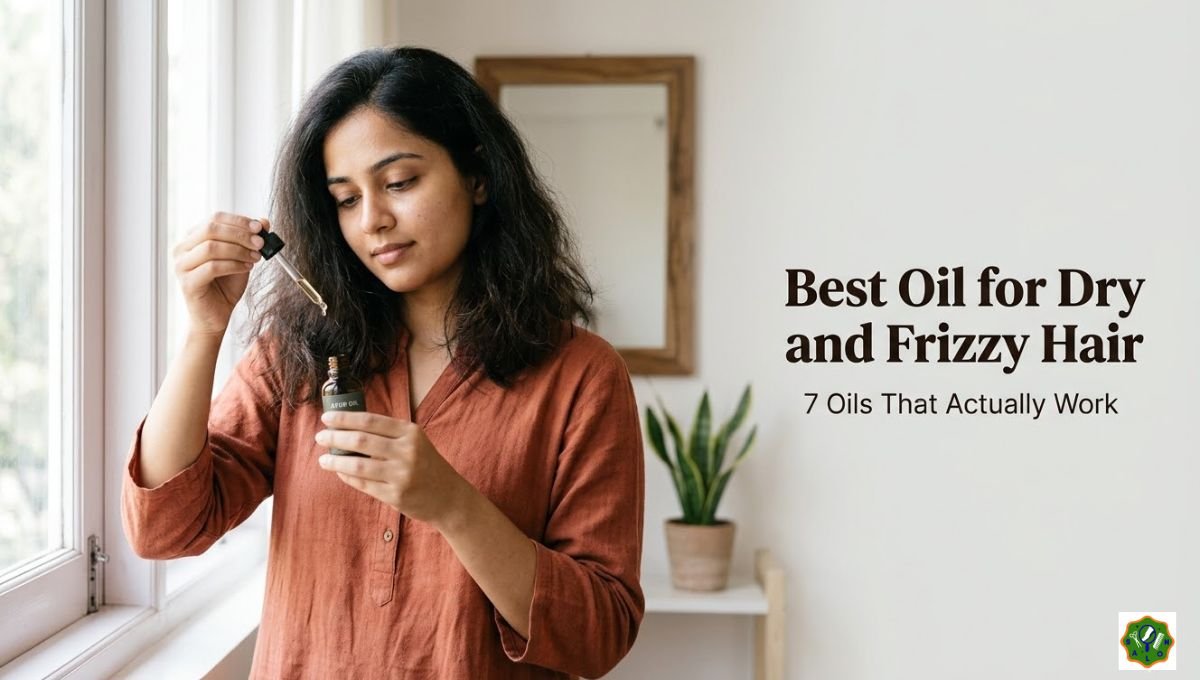
If your hair feels rough, looks dull, and frizzes up the moment humidity hits — you are not alone. Dry and frizzy hair is one of the most common hair problems people deal with, and most store-bought products only offer a temporary fix. What your hair actually needs is deep, lasting moisture — the kind that natural oils provide.
The good news is that the best oil for dry and frizzy hair does not have to come from an expensive salon brand. Many of the most effective options are simple, natural oils you can find easily and use right at home. This guide covers exactly which oils work, why they work, and how to use them for real results.
Why Does Hair Become Dry and Frizzy in the First Place?
Before jumping into the oils, it helps to understand what is actually happening to your hair. Frizz is not just about too much moisture in the air — it is usually a sign that your hair is lacking moisture inside the strand itself.
When the outer layer of your hair (called the cuticle) is damaged or lifted, it can no longer hold moisture in properly. Environmental humidity rushes in and causes the strands to swell, creating that rough, puffy, uncontrolled look we all recognize as frizz.
Common reasons your hair ends up dry and frizzy include heat styling without protection, chemical treatments like coloring or bleaching, rough towel drying, harsh shampoos with alcohol or sulfates, pollution, and even just living in a dry climate.
This is exactly where the right hair oil steps in. Oils coat and smooth the cuticle, lock moisture into the strand, and create a barrier against humidity and environmental damage.
Best Oil for Dry and Frizzy Hair — Top 7 Options
1. Argan Oil — The All-Time Favourite
Argan oil is often called liquid gold in the beauty world, and it earns that nickname well. It is lightweight, absorbs quickly, and works on almost every hair type. It is packed with vitamin E and fatty acids that add instant shine and smooth down frizzy ends.
Because of its lightweight texture, argan oil is one of the best options for people with fine or medium hair who want frizz control without feeling weighed down. It can be used as a leave-in treatment, a heat protectant, or simply rubbed through dry ends to tame flyaways on the go.
Best for: Fine to medium hair, color-treated hair, everyday frizz control.
2. Coconut Oil — Deep Moisture for Thirsty Hair
Coconut oil is rich in omega-3 fatty acids and vitamin E, both of which help restore shine and support scalp health. It is one of the few oils that can actually penetrate the hair shaft rather than just sitting on the surface, which makes it great for deep conditioning.
However, coconut oil is heavier than argan oil. If you have fine hair, it can weigh your hair down or cause buildup if overused. People with thick, curly, or dry hair tend to get the best results. Use it as a pre-shampoo mask rather than a leave-in for the lightest effect.
Best for: Thick, curly, or very dry hair. Use sparingly if you have fine hair.
3. Jojoba Oil — Closest to Your Scalp’s Natural Oil
Jojoba oil is unique because its chemical structure is very similar to the natural oil your scalp produces (called sebum). This means your hair and scalp accept it easily without feeling greasy or heavy.
While many oils only coat the outer layer of the strand, jojoba is able to penetrate the hair cuticle and moisturize from the inside out, locking in hydration for longer. It is also great for the scalp and can help with dryness, flakiness, and irritation.
Best for: All hair types, especially those with dry scalp concerns.
4. Castor Oil — For Frizz Control and Strength
Castor oil is thicker than most hair oils but it delivers powerful results. It contains ricinoleic acid, a fatty acid that helps balance scalp pH, replenish natural oils, and protect chemically treated hair from becoming brittle and dry.
The antioxidants in castor oil also support keratin — the protein that makes up your hair — helping strands stay stronger, softer, and less prone to frizz. Because it is so thick, mix it with a lighter oil like jojoba or argan before applying to avoid buildup.
Best for: Dry, damaged, or chemically processed hair. Great for split ends.
5. Sweet Almond Oil — Lightweight Frizz Fighter
Sweet almond oil is loaded with magnesium, calcium, vitamin E, and fatty acids that coat hair with a protective layer to tame frizz and shield strands from environmental damage. It is lightweight enough for daily use and leaves hair feeling soft without any greasy residue.
It works beautifully as a finishing oil — rub two to three drops between your palms and smooth it over towel-dried hair before styling for noticeably smoother, shinier results.
Best for: Everyday use, fine to medium hair, humid climates.
6. Avocado Oil — Rich Nourishment for Damaged Hair
Avocado oil is high in healthy fats, minerals, and antioxidants that work together to repair dry and damaged hair. The fatty acids in avocado oil help protect the scalp from environmental stress and work to restore strength to brittle strands.
It is a heavier oil, so it is best used as part of a hair mask rather than a daily leave-in. Mixing avocado oil with a lighter oil and applying it as a warm mask before washing gives your hair a deep nourishment boost that can last several days.
Best for: Dry, damaged, or heat-stressed hair. Best used as a mask treatment.
7. Grapeseed Oil — Light and Non-Greasy
If you love the idea of hair oil but hate that greasy feeling, grapeseed oil is your answer. It is one of the lightest hair oils available and absorbs quickly without leaving any heavy residue. It contains vitamin E and linoleic acid, which help restore shine and strengthen the hair shaft.
Grapeseed oil is a great option for people with oily scalps who still deal with dry, frizzy ends. Apply it only to the mid-lengths and ends to avoid adding extra oil to the roots.
Best for: Oily scalp with dry ends, fine hair, those who dislike heavy oils.
How to Use Hair Oil Correctly
Using the right oil is only half the equation. The way you apply it matters just as much.
As a Pre-Shampoo Treatment
Apply your chosen oil generously to dry hair — from roots to ends. Leave it on for at least 15 to 30 minutes, or even overnight with a shower cap for deep treatment. Then shampoo and condition as usual. This is the best method for very dry or damaged hair.
As a Leave-In Treatment
After washing and towel-drying your hair, take 2 to 3 drops of a lightweight oil (argan, almond, or grapeseed work best) and rub it between your palms. Smooth it through your mid-lengths and ends. Do not apply heavy oils to roots this way — it will look greasy.
As a Frizz Finisher on Dry Hair
Even after styling, a tiny amount of lightweight oil smoothed over the surface of your hair can instantly tame flyaways and add a beautiful shine. Less is more here — start with one drop and build up only if needed.
As a Hot Oil Mask
Warm your chosen oil slightly (never hot — just lukewarm) and massage it into your scalp and hair. Cover with a warm towel or shower cap and leave for 20 to 30 minutes. Rinse and wash as normal. This is especially effective in dry seasons or after a lot of heat styling.
Common Mistakes to Avoid
Even great oils can cause problems if misused. Here are a few things to watch out for:
Using too much oil is the most common mistake. A little goes a very long way. Start with 2 to 3 drops and see how your hair responds before adding more.
Applying oil to roots when you have an oily scalp will make things worse. Focus oil on the ends and mid-lengths unless you are doing a scalp treatment with the intention of washing it out.
Not rinsing thoroughly enough can lead to buildup that makes hair look dull and heavy. Always shampoo well after a mask or pre-wash treatment.
Choosing an oil that is too heavy for your hair type can weigh fine hair down and cause it to look flat. When in doubt, start with a lighter oil like argan or almond.
Final Thoughts
Dry and frizzy hair is not something you have to live with. The right natural oil, used consistently and correctly, can completely transform how your hair looks and feels. Start with one oil that matches your hair type, use it regularly, and give it at least two to three weeks to see real results.
Whether you choose argan for its lightweight shine, coconut for deep moisture, or jojoba for its similarity to your natural scalp oils — each one of these options has real, proven benefits. Your hair just needs the right nourishment to go from rough and frizzy to smooth, healthy, and full of life.
Word count: ~1,180 words