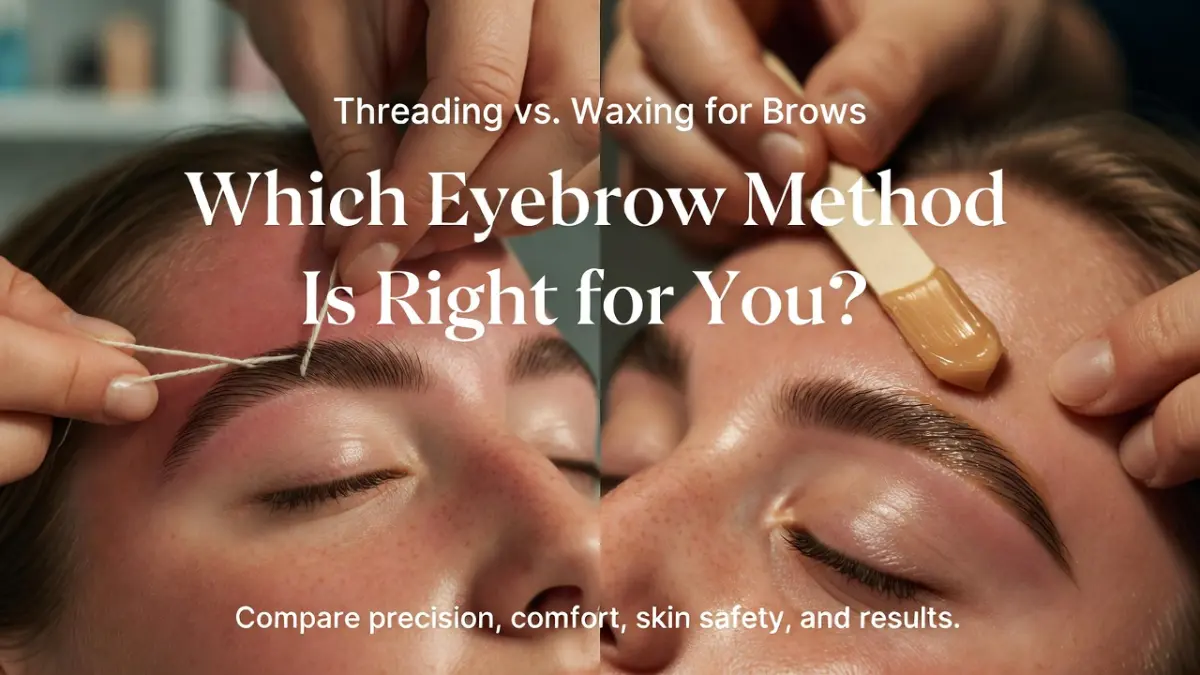
Whether you should thread or wax your eyebrows has been a debate for years. But is one really better for your brows?
The reality is both methods are great for cleaning up your brows and giving you a structured shape that lasts for weeks. There really is no one-size-fits-all method when it comes to brow grooming.
The choice between threading and waxing your brows completely depends on your own preference, skin type, and the look you’re going for. To help you decide which process would work best for you, we’ve answered the most common questions about threading versus waxing your brows.
Threading vs. Waxing: The Main Differences
Threading and waxing each have their own advantages and disadvantages. Some like threading because they feel that it gives a more natural look. Others like waxing because it is so quick and efficient.
Understanding how each method works can help you make the best choice for your brows and your skin.
What Is Eyebrow Waxing?
Eyebrow waxing is the process of removing unwanted hair using hot wax. The wax is applied to a small area of skin where unwanted hair is growing. Once the wax is applied, a cloth strip is placed over the wax and pressed down.
As the wax dries, it melts to the top layer of skin and grips the unwanted hair. After two to three seconds, the strip is pulled off in the opposite direction of hair growth, leaving the skin free of any unwanted hairs.
Brow waxing can cost between $10 and $30, making it an affordable option for most people.
Pros of Waxing:
- Quick results that save you time
- Often leaves you with smoother results than threading
- Creates a sharp, clean shape
- Removes hair from larger areas efficiently
Cons of Waxing:
- Irritates skin due to tugging, often leaving the skin red for a few hours
- Possibility of burning due to hot wax
- Possibility of irritation due to resins, preservatives, and artificial fragrances in the wax
- Not ideal for sensitive skin
People who benefit the most from waxing are those who want quick results and do not have sensitive skin. Individuals who want a sharply shaped brow with minimal strays also often turn to waxing, as waxing can completely wipe the skin clean in larger areas.
What Is Eyebrow Threading?
Eyebrow threading begins with a technician cleaning the eyebrow area to prevent any infection. From there, the esthetician will grab a thin cotton thread, doubling and twisting it.
As they twist this thread around your brow hairs, it will grab onto the unwanted hairs and cleanly pull them out by the root. This ancient technique has been used for centuries and remains popular today.
Brow threading costs between $10 and $40, depending on your location and the esthetician’s experience.
Pros of Threading:
- Less irritating as it has little contact with the skin
- No chance of burning
- More precise, natural-looking shape
- Better for sensitive skin
- No chemicals involved in the process
Cons of Threading:
- Takes longer than waxing
- If done incorrectly, can cause irritation and ingrown hairs
- Requires a skilled technician for best results
People who have sensitive skin often benefit from threading rather than waxing. It’s a more natural hair removal method than waxing since it doesn’t involve any chemicals. Others also turn to threading when they want a more precise shape or natural brow, as it is much easier to pick out individual hairs you would like removed with threading.
How Long Do Results Last?
In reality, results from waxing and eyebrow threading both last the same amount of time due to the hairs being pulled from the root in both processes.
Results from both processes last about a month, give or take, depending on how fast your hair grows. Some people may need touch-ups sooner if their hair grows quickly, while others can go longer between appointments.
| Method | Average Cost | Results Last |
|---|---|---|
| Waxing | $10 – $30 | 3-4 weeks |
| Threading | $10 – $40 | 3-4 weeks |
Which Method Is Safer for Your Skin?
Though both of these processes can irritate your skin in different ways, they are both completely safe as long as your professional takes the right precautions and has good technique. Precautions are different depending on the method.
Threading Safety
For threading, your esthetician should make sure they have a clean surface to work with, which means wiping your brows with an alcohol pad before the process starts.
The esthetician should also have good technique to avoid getting the thread too close to the skin so it will not pinch. A skilled threader knows exactly how to maneuver the thread without causing unnecessary discomfort.
Waxing Safety
For waxing, you should look into any topical or oral medications you take, like acne medications, as they often have warnings against waxing because the skin is already extra sensitive.
Other precautions include general techniques of the esthetician, such as making sure the wax isn’t too hot for your skin, applying the wax to the correct area, and avoiding unnecessary tugging in the wrong direction.
In either case, it is recommended that you speak to your doctor about the methods if you’re unsure about safety. Allergy tests for waxing can also be performed prior to the procedure if you contact your esthetician beforehand.
Is Threading or Waxing Safer for Your Brows?
Threading and waxing are both safe for your brows as long as the esthetician uses the correct technique.
In both methods, the professional pulls hair directly from the root, compared to shaving which cuts the hair at the skin’s surface. This means the main risk for your brows with both waxing and threading is the risk of ingrown hairs.
This is a possibility with either method if done incorrectly. To avoid this, the professional should pull hair out in the opposite direction of the hair growth. Proper aftercare also helps prevent ingrown hairs from developing.
Does Waxing or Threading Hurt More?
Ultimately, pain level varies by person when it comes to both methods. Everyone’s pain tolerance is different, and what feels uncomfortable to one person might be barely noticeable to another.
Waxing happens all at once, so it is quicker but your brows may be more tender for a couple of hours after the procedure. With threading, the procedure takes longer, so you may be more uncomfortable during the procedure, but have little to no pain after you leave the salon.
If you are concerned about pain when it comes to waxing or threading, talk to your esthetician before the procedure about numbing creams and pain killers they recommend for alleviating pain. Many estheticians also offer aloe vera gel for the brows after the procedure, which helps calm any discomfort.
Which Method Is Best for Shaping Brows?
If you want a precise, unique eyebrow shape, threading tends to be the better option. With threading, you can choose which individual hairs would be best to go for the shape you want to achieve.
Waxing removes all the hair in a certain area, which makes it impossible to be as precise. However, waxing is excellent for creating clean, sharp edges and removing bulk quickly.
For those who want natural-looking brows with subtle shaping, threading gives you more control. For those who want dramatic, sculpted brows with clean lines, waxing might be the better choice.
How to Prep for Your Appointment
Prep for a waxing or threading procedure is generally the same. These methods both involve your skin, and how your skin is prepared that day is a big part of the process.
Prepping for a wax or threading procedure can make or break your results. Taking a few simple steps before your appointment ensures better outcomes and less irritation.
Tips for preparing for your waxing or threading appointment:
- Come in with a clean, makeup-free face
- Don’t self-tan your face beforehand
- Be sure that your brows are grown out enough to effectively wax or thread (one-eighth to one-fourth of an inch)
- Avoid caffeine before your appointment, as it can make skin more sensitive
- Don’t schedule your appointment right before your period when skin is most sensitive
Other Eyebrow Hair Removal Alternatives
There are many other hair removal alternatives to these two methods. They all have their pros and cons as well, but it ultimately depends on your personal preference and budget.
Laser Hair Removal
Laser hair removal is a more costly, yet permanent choice for hair removal. It involves light pulses that destroy the hair follicle and root so hair can no longer grow in the area.
It requires multiple sessions over several months. By the time the hair removal is complete, you should see permanent results or a significant reduction in hair growth. This option works best for those tired of regular maintenance appointments.
Tweezing
Tweezing is the process of removing single hairs from the root one at a time. Pros to this method include the fact that it is low-cost and can be done from home.
The process can, however, be long and painful. If you’re not a professional, you run the risk of overplucking and not achieving the eyebrow shape you intended. Tweezing is best for maintenance between professional appointments.
Electrolysis
Electrolysis is a method of permanently removing hair by destroying the growth center of the hair by using chemical or heat energy. A small probe is typically inserted into the follicle as the individual hair is removed.
Just like laser hair removal, this process takes several treatments over a period of time. The main benefit of this method is that it becomes permanent after several treatments. Cons include having to attend multiple sessions and high costs.
| Hair Removal Method | Cost Range | Results Duration | Best For |
|---|---|---|---|
| Threading | $10 – $40 | 3-4 weeks | Sensitive skin, precision |
| Waxing | $10 – $30 | 3-4 weeks | Quick results, sharp shape |
| Tweezing | Free – $20 | 1-2 weeks | Touch-ups, single hairs |
| Laser | $200 – $400+ | Permanent | Long-term solution |
| Electrolysis | $30 – $200 per session | Permanent | Permanent removal |
FAQ About Threading vs. Waxing
Which is better for sensitive skin: threading or waxing?
Threading is generally better for sensitive skin because it has minimal contact with the skin and doesn’t involve any chemicals. Waxing can irritate sensitive skin due to the heat and adhesive properties of the wax.
If you have sensitive skin, always do a patch test before your first waxing appointment to check for allergic reactions.
Can I switch between threading and waxing?
Yes, you can switch between threading and waxing based on your needs and preferences. Some people alternate between methods depending on how much time they have or what kind of shape they want.
Just make sure to let your esthetician know which method you used last and when, as this can affect how they approach your brows.
How often should I get my eyebrows threaded or waxed?
Most people need to get their eyebrows threaded or waxed every three to four weeks. However, this varies based on your hair growth rate.
Some people with slower hair growth can wait up to six weeks, while those with faster growth might need appointments every two to three weeks.
Will threading or waxing make my brows grow back thicker?
No, neither threading nor waxing will make your brows grow back thicker. This is a common myth about hair removal.
When hair grows back after being pulled from the root, it grows back with a natural, tapered tip. The appearance of thickness is just the hair returning to its normal state.
What should I avoid after threading or waxing?
After either procedure, avoid touching the area excessively, applying makeup immediately, sun exposure, hot showers or steam, and any products with harsh chemicals or fragrances.
These precautions help prevent irritation and allow your skin to heal properly. Most estheticians recommend waiting at least 24 hours before applying makeup to the brow area.
Can I thread or wax at home?
While both can technically be done at home, it’s best to leave these procedures to professionals, especially for your eyebrows. Your brows frame your face, and mistakes can be hard to fix.
Threading requires significant skill and practice to master. Waxing at home can lead to burns or uneven results if you’re not experienced. For best results and safety, visit a professional.
Making Your Decision
While there are many differences between waxing and threading your eyebrows, they are both great ways to shape your brows. If you are still unsure of which method would be best for you or want to book an appointment, it is best to connect with a professional.
Consider your skin type, pain tolerance, desired shape, and how much time you have for the appointment. You might even want to try both methods on separate occasions to see which one you prefer.
Overall, the best method for taming your brows is up to you, as they are both safe and effective when performed by a skilled professional. The most important thing is finding a method that works for your lifestyle and gives you the brow shape you love.